
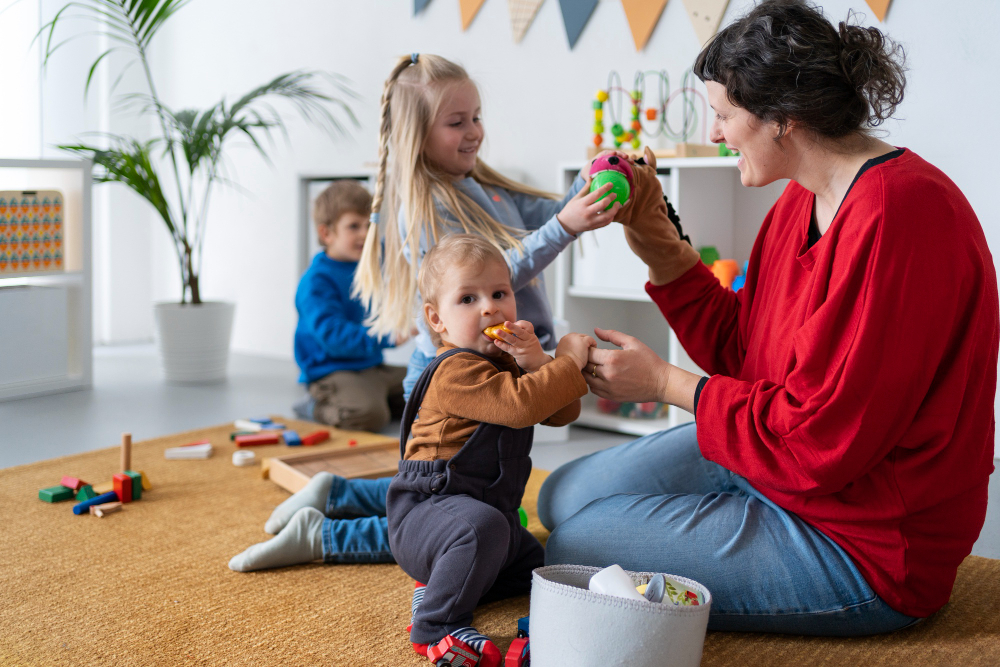
Sensory play allows children to experience their senses through hearing and sight and touch and smell and taste in enjoyable activities. It also includes activities that involve movement and balance. Children who explore their environment through their senses will naturally develop curiosity which leads them to investigate and learn in a scientific way.
Children who have sensory differences are known as having Sensory Processing Disorder (SPD). The brain functions of these individuals process sensory data through unique patterns which results in their potential experience of sound and touch and movement sensitivity. Occupational Therapists work to help children manage their sensory responses when performing regular daily tasks.
Some sensory play examples include:
Touch
Squashing playdough, feeling different textures like sand, water, or wet and dry materials, exploring treasure baskets.
Sight
Watching colours, playing with light and shadows, or spotting patterns in nature.
Sound
Listening to music, nature sounds, or sensory sound jars.
Smell
Exploring scents from flowers, spices, or scented dough.
Taste
Sampling different fruits and vegetables.
Movement/balance
Swinging, jumping, or rolling – activities that activate the vestibular system in the inner ear.
Why sensory play is so important for young children’s development
Children need sensory play as their basic requirement for proper development. Research shows that brain development improves when children experience multiple senses at once because this method strengthens neural connections which control learning and memory processes¹.
Children develop essential skills for problem-solving and attention and communication through their experiences of touching objects and seeing things and hearing sounds and smelling scents and moving their bodies². Children achieve better learning results through multi-sensory play because this approach boosts their motivation and focus which enables them to understand new concepts better than traditional passive learning methods. The program helps children build social and emotional skills through its soothing activities which teach them to manage their feelings and form good connections with others³.
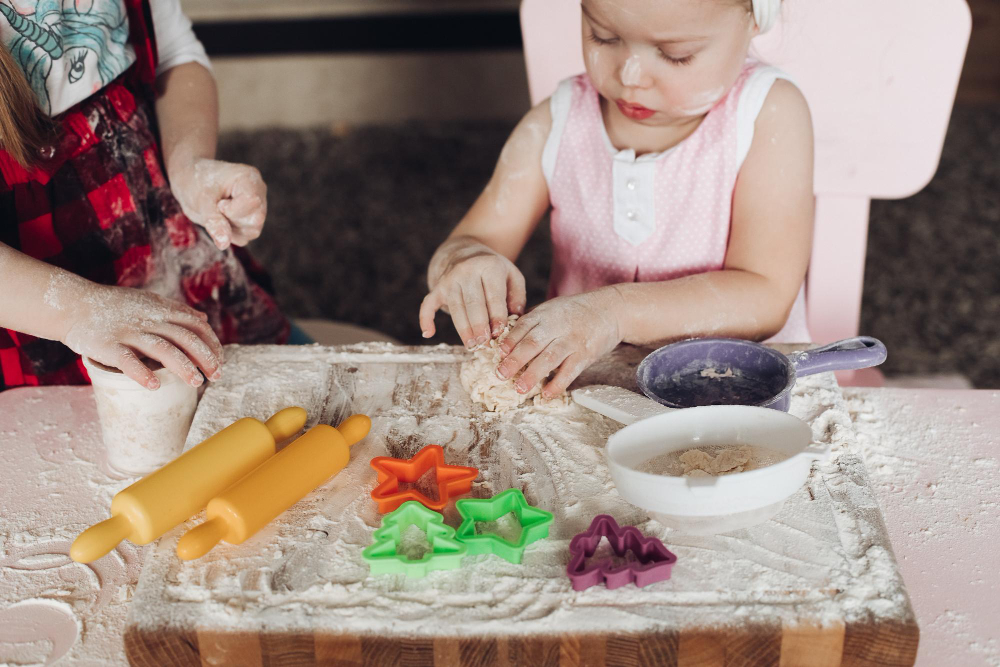
Sensory play provides additional advantages to children who have Special Educational Needs and Disabilities (SEND). Research indicates that sensory activities help individuals control their emotions because they create a soothing environment with established patterns which reduces their anxiety and sensory overload4. The activities promote cognitive development through direct multi-sensory experiences which let children discover and resolve problems while developing their language skills5. Children can improve their motor skills through fine and gross motor activities and working with different textures and playing movement-based games which help them learn physical coordination and control6.
Children develop social skills through sensory play because they experience things together which enables them to communicate and connect with others. The combination of emotional benefits with cognitive advantages and social advantages makes sensory play an effective method for inclusive learning environments which enables children with neurodiversity to develop their learning abilities and build their confidence and skills.
When can sensory play start?
Sensory play begins when babies enter the world. The womb environment allows babies to sense their surroundings through their ability to recognise voices and identify scents. The first moments of life begin with basic sensory activities which include light tickling and body massage and blowing raspberries against the stomach to encourage natural exploration and growth. The children will experience new sensory play activities as their development progresses.
How does sensory play support EYFS and SEND learners?
Sensory play supports development across all EYFS areas:
Physical Development
Activities like splashing, moulding, and scooping help develop motor skills and hand-eye coordination – foundations for early literacy.
Communication and Language
Describing textures, shapes, and sensations expands vocabulary and understanding of new concepts.
Personal, Social, and Emotional Development
Sensory play aids emotional regulation, helping children calm anxieties and frustrations while encouraging sharing and relationship building.
Expressive Arts and Design
Exploring materials sparks creativity and allows children to express themselves uniquely.
How can inclusive settings weave sensory play into everyday activities?
Children learn through everyday activities when sensory play becomes an accessible and interesting part of their daily routine. The following ideas are simple methods which nursery practitioners can implement:
- Snack time: Turn it into a sensory adventure by encouraging children to explore the colours, textures, smells, and tastes of different fruits and veggies. Discuss these sensory details to build language skills.
- Outdoor play: Use natural materials like leaves, sticks, and pebbles for treasure baskets or sensory trails where children can feel different textures and listen to nature sounds.
- Storytime: Include books with tactile elements or incorporate sensory props related to the story, such as scented play dough or sound jars, to deepen engagement.
- Creative arts: Offer a variety of messy play options – wet and dry paints, sand, or clay – so children can explore textures while expressing themselves.
- Movement and balance: Build sensory circuits that include crawling, swinging, or balancing activities, which help develop motor skills and body awareness crucial for learning.
- Calm corners: Create a quiet space with soft lights, weighted blankets, or calming sensory objects to help children regulate emotions when feeling overwhelmed
These small, thoughtful changes make sensory experiences part of the natural learning flow, supporting every child’s unique development and adding joy to their day.
References
- Abidin, N., et al. (2022). Significance of Sensory Activities among Toddlers for Sensory Skills Development and Cognitive Growth. https://ebpj.e-iph.co.uk/index.php/EBProceedings/article/view/3760
- Fan, Y., Chong, D. K., & Li, Y. (2024). Beyond play: A comparative study of multi-sensory and traditional toys in child education. Frontiers in Education, 9, Article 1182660. https://www.frontiersin.org/articles/10.3389/feduc.2024.1182660/full
- Little, L. M., et al. (2015). Sensory Processing in Children with SEND: Impact on Learning and Social Development. https://pubmed.ncbi.nlm.nih.gov/24477447/
- Baranek, G. T. (2002). Efficacy of sensory and motor interventions for children with autism. Journal of Autism and Developmental Disorders, 32(5), 397–422.
https://pubmed.ncbi.nlm.nih.gov/12472101/ - Case-Smith, J., Weaver, L. L., & Fristad, M. A. (2015). A systematic review of sensory processing interventions for children with autism spectrum disorders. Autism, 19(2), 133–148. https://pubmed.ncbi.nlm.nih.gov/24477447/
- Pfeiffer, B., Koenig, K., Kinnealey, M., Sheppard, M., & Henderson, L. (2011). Effectiveness of Sensory Integration Interventions in Children With Autism Spectrum Disorders: A Pilot Study. American Journal of Occupational Therapy, 65(1), 76–85. https://pubmed.ncbi.nlm.nih.gov/21309374/