

As of 1 September 2025, changes to the Early Years Foundation Stage (EYFS) have come into effect. I wanted to read Newham’s SEND and Inclusion Strategy 2023–28 to see how the council plans to work with schools and families to improve outcomes for disadvantaged children.
Newham’s priorities for 2025–28
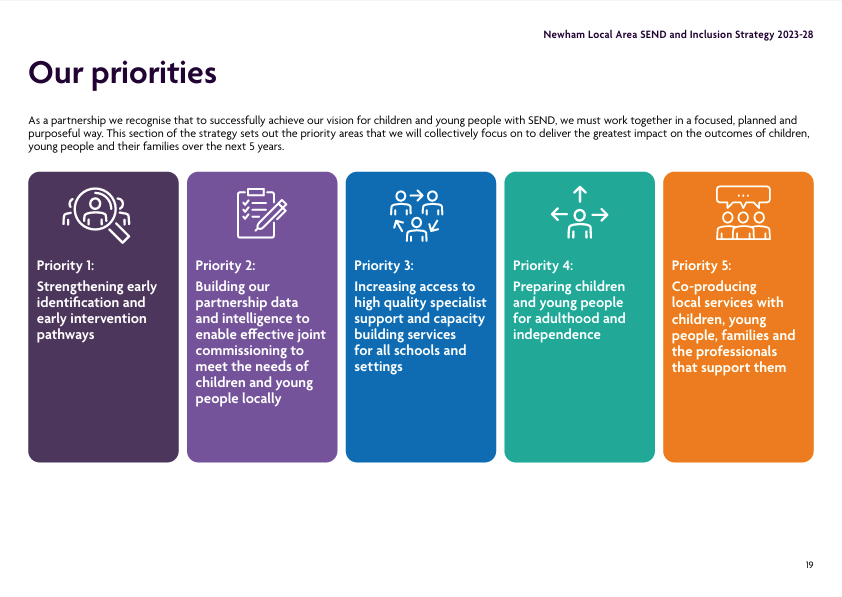
The council has set five main priorities:
- Strengthen early identification and intervention pathways.
- Build partnerships, data, and intelligence to enable joint commissioning that meets children’s needs.
- Increase access to high-quality specialist support and services in all schools and settings.
- Prepare children and young people for adulthood and independence.
- Co-produce local services with children, young people, families, and professionals.
SEND Challenges in a deprived borough
Newham remains one of the most deprived areas in the country. Many children here have complex needs linked to poverty – you can read the statistics in more detail here. In my experience as a SEND professional, I have also noticed a rise in SEND among children from middle and high-income families.
Across society, prejudice still shapes outcomes. Race, class, and social hierarchies fuel unfair judgements and stereotypes. These negative behaviours affect children’s mental health, self-esteem, and academic performance.
The Local Government finance policy statement 2025 /2026 promised more funding for SEND. But the 30-hour free childcare scheme is tied to parents’ work and income. This excludes the poorest families – the ones who often need support most.
In his newsletter of 29 August 2025, Dr Grenier warned:
“A leading researcher worries that the government's early years reforms will benefit better-off families at the expense of children from lower income backgrounds.”
Back in 2023, Claire Creaford and Laura Outhwaite of UCL also said:
“These reforms will undo what little progressivity there was left in the system, funnelling more money to support children from potentially very high-income working families, while those in non-working families receive less support.”
Local action and financial reality
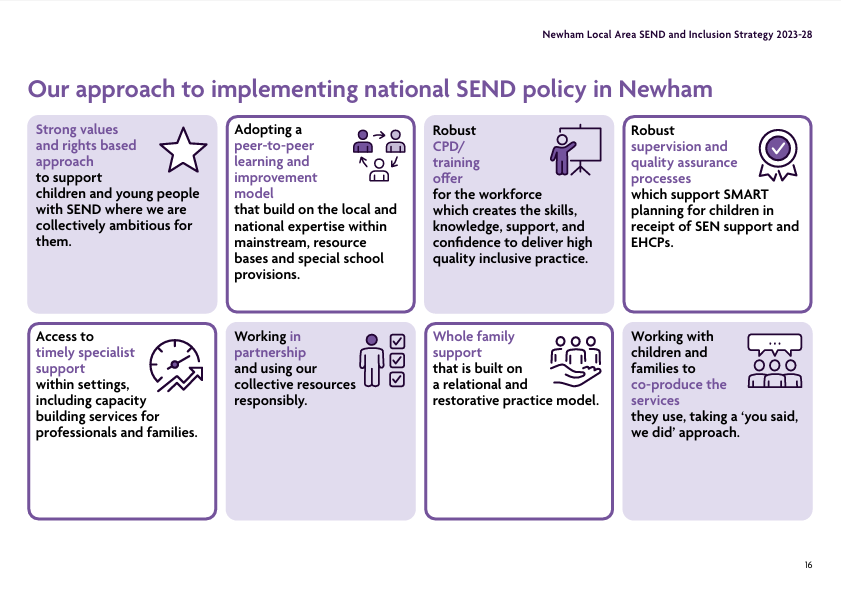
In Newham’s Local Area SEND and Inclusion plan for 2025-2028, Mayor Rokhsana Fiaz OBE promised to increase local specialist provision so children with complex needs get high-quality support close to home.
But year after year, funding gaps force schools and nurseries to cut staff, reduce curriculum breadth, and scale back extra-curricular activities. This makes it harder to close the attainment gap and enable children from economically disadvantaged children to reach their full potential.
When I was Deputy Manager in a PVI setting, we felt this pressure directly. Minimal support and tight budgets made it hard to meet the SEND Code of Practice while also staying financially sustainable and keeping occupancy full. Enabling children from socio-economically disadvantaged backgrounds to reach their full potential is still far from being achieved.
The role of skilled staff
Paragraph 1.19 of the new EYFS says:
A well-trained, skilled team of practitioners can help every child achieve the best possible education outcomes.
As a SEND consultant, I put this into practice. I make reasonable adjustments and implement “ordinarily available provision” (AOP) for all children – whether or not they have an EHCP. This creates a supportive environment where every child can thrive.
Wider pressures on the system
Teacher shortages add another challenge. Many are leaving due to stress, workload, challenging behaviour, and low pay. These conditions make it even harder to deliver on SEND priorities.
Despite this, Mayor Fiaz insists:
The council is committed to making Newham the best place to grow up for every child and young person…the government will direct far more funding in the most deprived local authorities in the country in 2025/26
Newham has already made progress with:
- More therapy funding.
- More speech and language and occupational
- therapists.
EHCP waiting times cut to 30 weeks.
Practical steps while waiting for support
Waiting lists remain long. In the meantime, I recommend early years practitioners focus on:
- Setting SMART (specific, measurable, achievable, realistic, timebound) targets and recording children’s progress.
- Creating sensory rooms where children can regulate their emotions and manage overstimulation. These are especially helpful for children with autism, ADHD, or sensory processing difficulties.
Frequently Asked Questions
What is the Newham SEND and Inclusion Strategy 2023–28?
It is a five-year plan by Newham Council to improve outcomes for children with special educational needs and disabilities (SEND). The strategy focuses on early identification, stronger partnerships, better specialist support, preparing young people for independence, and co-producing services with families.
Why is early identification of SEND important?
Spotting SEND needs early allows children to get help before challenges grow. Just as early medical screening prevents illness from becoming serious, early SEND support helps children succeed in school and develop independence.
How does poverty affect SEND in Newham?
Newham is one of the most deprived boroughs in the UK. Many children face complex needs linked to poverty. At the same time, SEND is also rising among children from middle- and high-income families. Poverty makes it harder for families to access consistent support, and schools often struggle with funding cuts.
What are the main challenges schools face in delivering SEND support?
Schools and nurseries often face funding gaps, staff shortages, and high workloads. This means they may struggle to provide the full range of support that children with SEND need, even when local priorities are clear.
What practical steps can early years practitioners take while waiting for specialist support?
Practitioners can set SMART targets to track children’s progress and create sensory spaces that help children manage their emotions and behaviour. Skilled practitioners using everyday inclusive practices (known as “ordinarily available provision”) can make a big difference.
How is Newham improving SEND services right now?
Recent improvements include more funding for therapy services, more speech and language and occupational therapists, and shorter waiting times for Education, Health and Care Plans (EHCPs).
What support can nurseries and early years leaders access?
Support includes staff training, SEND audits, help with EHCPs and IEPs, inclusive curriculum planning, and sensory resources. Working with an experienced SENCo or consultant can help settings prepare for Ofsted, build staff confidence, and deliver high-quality provision.